
Risk assessment for machinery in 5 steps
1. Define the limits of the machinery
This defines how and where the machine is to be used.
You need to determine:
intended use
reasonably foreseeable misuse
which users are involved (operators, service personnel, etc.)
the machine’s lifecycle (transport, operation, maintenance, etc.)
space requirements and interfaces with other machinery
materials used (e.g. hazardous substances)
time-related aspects (service life, maintenance intervals, etc.)
Common mistake: describing only normal operation - and missing the rest of the lifecycle.
2. Identify sources of risk
Traditionally, risks have been sought through checklists (mechanical, electrical, etc.).
The challenge with that approach?
Unique and system-related risks are often overlooked.
Another method is to analyze the machine based on the entire lifecycle:
design
transport
installation
adjustment
programming
operation
maintenance, cleaning
fault handling
decommissioning
Break it down into:
activities (what people do)
automatic processes (movements, pressure, sequences)
combinations of both
Ask the question:
What can go wrong in this exact situation - here and now?
Specify the source of the risk, what causes it, and the type of harm that may occur.
This provides a more accurate and reality-based analysis.
You can also use legal requirements as support to ensure that you have not missed essential requirements that affect the risk assessment.
Noex gives you the option to choose the approach that suits you best.
3. Estimate the risk
Once the risks have been identified, you must estimate the risk.
Risk usually consists of:
Severity - how serious the harm could be
Likelihood - how probable it is that it will occur
In many cases, it is sufficient to identify that a risk can lead to serious harm - in that case, action is required.
Serious risks must always be addressed.
4. Evaluate the risk
Now you determine:
Is the risk acceptable - or must it be reduced?
This must not be a subjective assessment.
You should rely on:
standards (EN, ISO, IEC)
industry practice
technical guidelines
Important: what constitutes an acceptable risk varies between different machines and applications.
5. Eliminate or reduce risks
If the risk is not acceptable, measures must be taken.
You should always follow this priority order:
A - Eliminate the risk
Modify the design so that the hazard is removed.
Example:
remove the entrapment hazard
eliminate sharp edges
B - Implement technical safeguards
If the risk cannot be eliminated:
safeguards
enclosures
safety functions
light curtains
safety control systems
C - Inform about residual risks
As a last step:
warnings
instructions
personal protective equipment requirements
Important: information never replaces technical safeguarding.
Risk assessment in practice - where it often falls short
Too generic analysis
Risks are described without any connection to real situations.
Lifecycle is overlooked
Risks arising during maintenance, cleaning, troubleshooting, relocation, etc. are omitted.
Focus on “typical risks”
Unique risks in the system are not identified.
No link to measures
It is not possible to see how the risk and its measures are connected.
No verification
There is no evidence that the measures have had the intended effect.
Combined machinery - where risks increase
When multiple machines are integrated:
new risks arise
existing risks change
A new risk assessment is always required.
The focus should be on:
interfaces between machines
control systems
sequences
emergency stop
This is often where the most serious risks are found.
Do you want to read more about what applies to combined machinery? read more here →
Link to technical documentation
The risk assessment must show:
which requirements apply
which sources of risk have been identified
which measures have been implemented
which risks remain
It is a central part of the technical documentation.
Do you want to read more about technical documentation? see our article Technical documentation according to the Machinery Directive - requirements, content and responsibilities
Summary
Risk assessment is not a formality - it is the core of safe design.
It should:
be carried out early in the process
cover the entire lifecycle
identify real risks
lead to concrete measures
be verified and documented
Do you want to simplify risk assessment?
Many companies get stuck in:
manual Excel files
unstructured analyses
lack of traceability
With Noex, you can:
work consistently and in a structured way
maintain control over the entire process
link risk → measure → requirement
build technical documentation
Book a demo: https://noex.se/book-a-demo
Do you want to read more about why safety pays off? read our article Safety pays off
Do you want to read more about CE marking? you will find it in our article CE marking of machinery - requirements, process and technical documentation

What are the implications of the Cyber Resilience Act (CRA) for machinery manufacturers - and what steps must you take?
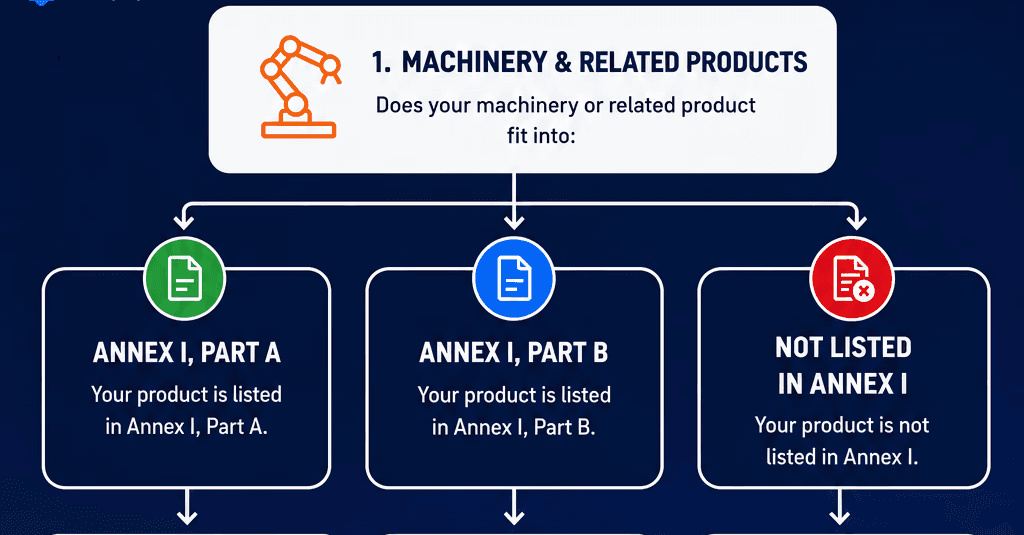
Annex IV becomes Annex I in the Machinery Regulation - what are the implications of this change?

Noex and SIS enter into a licensing agreement - standards integrated directly into the platform