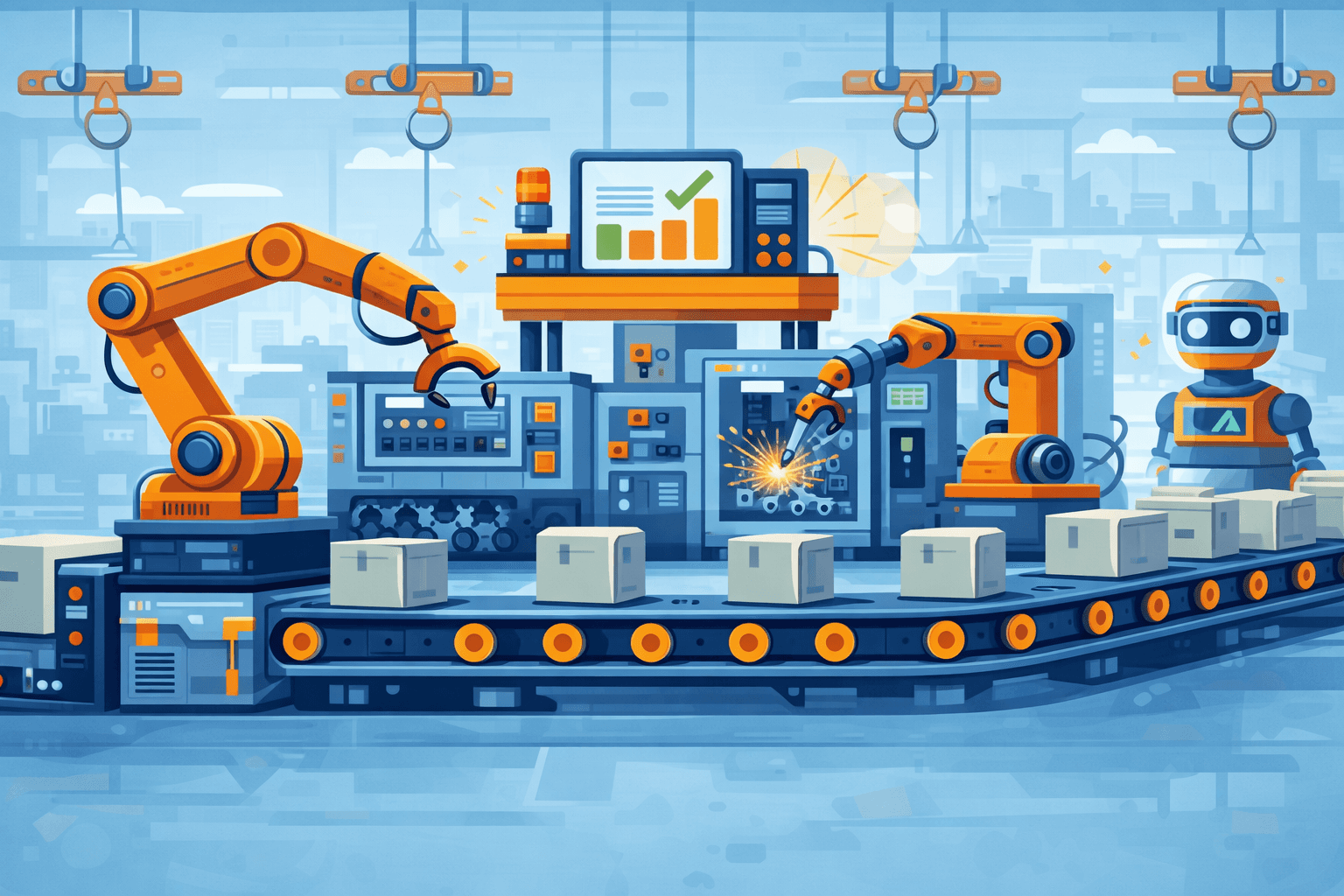
Assembly of machinery - who is responsible for CE marking?
What is an assembly of machinery?
A group of machinery (assembly of machinery) is a combination of two or more machines that are assembled to function as a single unit - for example, a machinery/production line.
To be considered aassembly of machinery, it is required that:
the machines together perform a common function
they are functionally dependent on one another
they are interconnected in a way that affects the whole
they have a common control system
The decisive factor is therefore not how they are connected - but that they function as a system.
You become the manufacturer - regardless of role
When you assemble several machines into a whole, you are legally regarded as the manufacturer of the machine.
This means that you:
are responsible for ensuring that the entire system is safe
must meet all applicable health and safety requirements
must CE mark the assembly of the machinery
This also applies even if all included machines already bear CE marking.
The assembly of machinery must be CE marked
An assembly is regarded as a new and complete machine from a legal perspective.
This means that:
the entire system must comply with the Machinery Directive or the Machinery Regulation
a new CE marking is required
the documentation must cover the whole - not the individual parts
Using a composite machine that is not correctly CE marked may result in penalty fees.
Read our complete guide to CE marking of machinery
Risk assessment of assembled machines
When machines are connected, new risks almost always arise.
Examples of new risks:
unexpected start-up sequences
crushing hazards between machines
insufficient coordination of stop functions
ergonomic risks
Therefore, a new, documented risk assessment for the entire system is always required.
Want to read more about risk assessment? See our article Risk assessment of a machine in 5 steps.
What should the risk assessment cover?
The risk assessment should:
identify new risks in the system
assess the severity of the risks
implement measures
verify that the measures work
Particular focus should be on:
interfaces between machines
control systems and signals
sequences and dependencies
emergency stops - number and placement
It is often at the interfaces that the greatest risks are found.
Important points to consider
To perform a correct risk assessment, you must:
understand how the entire system works
also analyze operational disruptions and maintenance
identify what can go wrong in practice
The combination of machines must always be safe - not just each individual machine.
Instructions for use for assembly of machinery
You must prepare a common instruction manual for the whole machine.
It must:
describe the entire system
be adapted to the user in the correct language
meet the legal requirements
It is not sufficient to refer to each individual machine's manual.
Four common scenarios (with requirements)
1. Several CE-marked machines are assembled
Even if all machines are already CE marked, the following must be carried out:
interfaces must be risk assessed
emergency stops must be analyzed
a new instruction manual must be produced
the entire system must be CE marked
Common misconception: assuming that the CE marking "carries over".
2. CE-marked machines + partly completed machine
Example: robot in a machine line
You must:
complete the partly completed machine according to the instructions
risk assess the entire system
manage interfaces and control
CE mark the whole assembly (with a common control system)
3. CE-marked machines + older machines
Older machines (before 1995):
do not need CE marking
but must be upgraded if necessary
You should:
ensure that the entire system meets the requirements
risk assess interfaces
CE mark the composite machine
The whole system must be safe - regardless of the machines included.
4. Rebuilding an existing machine line
When rebuilding:
each machine must meet the relevant requirements
the entire system must be safe
The focus should be on:
interfaces
emergency stops
updated documentation
New CE marking is required only if it is considered a new machine.
Noex has a module that helps assess whether the change is considered substantial or not.
Common mistakes
The biggest risks we see in practice:
Machine lines are not CE marked as a whole
Old risk assessments are used, or reference is made to individual machines' documentation
Interfaces are not analyzed
Emergency stops are incorrectly designed
Instructions for use for the whole system are missing
This is one of the most common causes of non-compliance.
Summary
Assembly of machinery are legally clear - but often misinterpreted.
When machines are assembled:
a new machine is created
you become the manufacturer
the entire system must be CE marked
a new risk assessment is required
It is the whole that is assessed - not the parts.
Read our complete guide on CE marking of machinery
Want to simplify work with assemblies of machinery?
Many companies struggle with:
unclear responsibility
poor procedures during rebuilds and modifcations
lack of structure in risk assessment and documentation
With Noex you can:
manage entire machine lines in a structured way
link risks and measures for the entire machine line and the individual machines
ensure compliance
build complete documentation
Book a demo: https://noex.se/book-a-demo

What are the implications of the Cyber Resilience Act (CRA) for machinery manufacturers - and what steps must you take?
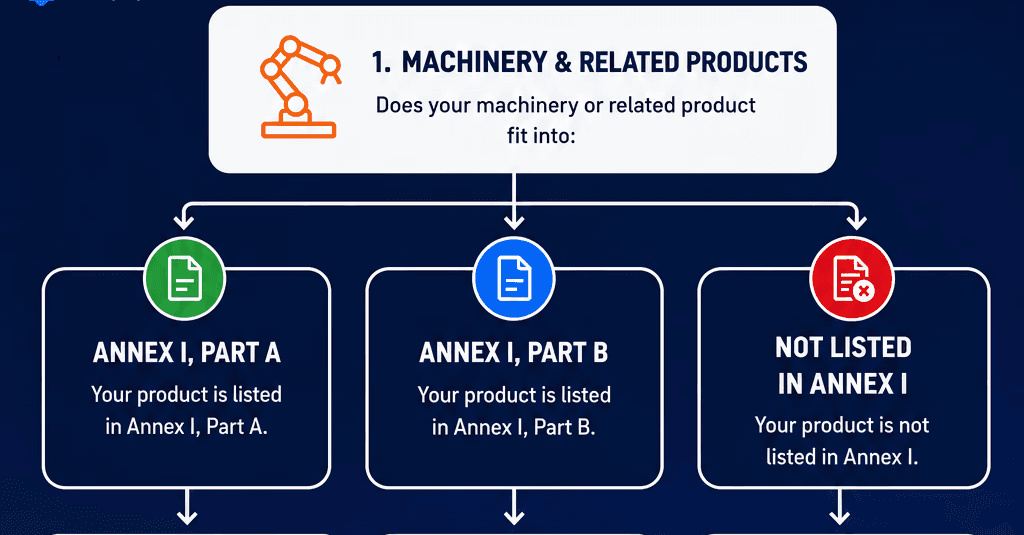
Annex IV becomes Annex I in the Machinery Regulation - what are the implications of this change?
Noex and SIS enter into a licensing agreement - standards integrated directly into the platform